Showing posts with label Leadership. Show all posts

Wednesday, December 15, 2021

BLINDSPOT IN LEADERSHIP

BLINDSPOT IN LEADERSHIP


INTRODUCTION
Blind spots is said to be the Achilles heel of leadership.  Blind spots are personal traits or aspects unknow to us that may limit our action, reaction, behaviour or believe, and therefore limit our effectiveness.  Blind spots are personal traits or aspects unknow to us that may limit our action, reaction, behaviour or believe, and therefore limit our effectiveness.

According to Robert Bruce Shaw, author of Leadership Blindspots, blind spots are unrecognized weaknesses or threats that can hinder a leader's success.  Leaders are blind to what they most need to improve.

As leaders ascend through the organization, it was found that self-awareness and emotional intelligence decline.  According to Travis Bradberry, the author of Emotional Intelligence 2.0, middle managers stand out with the highest EQ scores with CEOs, on the average, having the lowest EQ scores.


THE SPOTTED BLINDSPOTS

1. Doing it alone/afraid to ask for help
2. Being insensitive of own behaviours on others
3. Having an ‘I know’ attitude
4. Avoiding conflicts
5. Blaming others or circumstances
6. Treating commitments casually
7. Conspiring against others
8. Withholding emotional commitment
9. Not taking a stand
10. Tolerating ‘good enough’


THE COMMON CAUSES

1. Pride bordering arrogance
i. Overconfidence
ii. Overly positive
iii. Power 
2. Frequent unseen weakness
i. Spending time on operations rather than strategic thinking
ii. Relying on own opinions
iii. Inability to balance the ‘what’ and ‘how’ of reaching a goal
iv. Relying on assumptions
v. Over-valuing how things are done in the past
3. Old school leadership mentality


SUMMARY

A leader who really knows their own strengths, weaknesses, and effect on others is more successful in their leadership role.


REFERENCES
1.    https://www.discprofiles.com/blog/2021/01/uncover-your-leadership-blind-spots

2.    https://www.forbes.com/sites/forbesbusinesscouncil/2020/05/08/overcoming-leadership-blind-spots

3.  https://www.inc.com/marissa-levin/the-top-10-leadership-blind-spots-and-5-ways-to-turn-them-into-strengths

Monday, April 1, 2019

LEADERS: PUT OTHERS FIRST

Image result for Cartoon LEADERS

The best leaders are those who desire to serve others, not themselves.  A true serving leaders:

  1. Puts others ahead of his own agenda
  2. Has the confidence to serve
  3. Initiate service to others
  4. Does not clamour for position
  5. Serves out of pure love

We have to love our people more than your position:

  • stop lording over people more than our position
  • stop role-playing for advancement, and start risking for the benefit of others
  • stop seeking own way and start serving others


Tips to improve
Perform small acts of kindness
Learn to tread slowly
Make a point to connect with as many people as possible
Move into action


SHARED FROM ARTICLE BY:
GENEVIEVE WORDSWORTH
TO GET A HEAD, PUT OTHERS FIRST
ACCOUNTANTS TODAY, MAY 2004

Tuesday, September 4, 2018

THE LEADERS DAILY TIPS

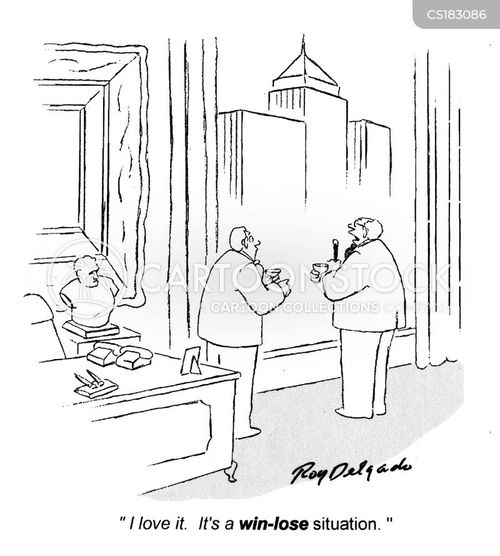
Image result for WIN VS LOOSE CARTOONS
Credit to CartoonStock

1.     When asking your people to tell you about something,          let them realize that it's safe to answer.

2.     Effective leadership means that the work gets done              and that followers feel good about it.
        Empathy is being aware of or sensitive to the feelings,          thoughts and experiences of another.
        Delivering support isn't just speaking in a friendly                tone  of voice.  It is working little by little to maintain          a very real, very natural human connection.

3.     Sometimes we do the wrong thing for all the right                reasons.  the route to success often comes with                    keeping all thoughts of tomorrow in check and leading          to what is, not what could be.

4.     Carrying too much 'weight' can kill you.
        Carrying too much 'wait' exacts its toll in productivity,          piece of mind, and personal effectiveness.

5.     The role of leader involves achievement through                  others, often many others.  Get comfortable with                these few strategies:
             - delay is a strategy, use it; anger takes 5 to 7                       minutes to resolve physiologically (emotionally it                 can take years); schedule resolution instead of                     reacting in the moment
             - stop wishing for a better past
             - stop dwelling on the impact on you; make it                         about them
             - melt the ice, don't try to break it; you'll be                         surprise at what a little kindness can do

6.     People get hurt in arguments; if you win, they get                hurt....if they win, you get hurt....even petty                      arguments carry anger and damage.
        Win less and learn more.  Focus on the battle, not the          combatants or casualties.

Image result for WIN VS LOOSE CARTOONS
Credit to CartoonStock

Wednesday, May 2, 2018

TRANSFORMATIONAL LEADERSHIP – THE DUBAI MODEL


 (PROFESSOR DR. BASSEM YOUNES)
Image result for dubai clipart 

There is no finishing line in the race for excellence.  Transformational leadership is the kind of leadership which is the process of engaging with others, to create a connection that increases motivation and morality.  A very important part that could allow for Transformational Leadership is the emotional engagement.  The simplest way to look at Transformational Leadership is the transferring of vision into reality.

Setting an example is not the main means of influencing others, it’s the only means. Being an example is the only way you can influence other people.  Nothing great is ever achieved without enthusiasm.

Transformational is an ongoing function.  Transformational Leadership is that which facilitate a redefinition of people’s mission and vision, a renewal of their commitment and the restructuring of their systems.  It’s a relationship of mutual simulation, and elevation, that converts followers into leaders, and many convert leaders into moral agents.  Hence, Transformational Leadership must be grounded in moral foundations.

There is no leadership without follow-ship.  Setting an example is the only means of influencing them.  Influence involves an exceptional form of influence that moves followers to accomplish more than what is usually expected.  The core elements in leadership is concerned with emotions, liaise, ethics, standards, and long-term goals.

There’s a wide range of leadership influence where followers and leaders are bound together in the transformational process.  You need to be able to work together and to facilitate the transformation.


Dubai Government’s Model

Government’s role is to make people happy

Smart government need to be smart, understanding people’s needs and responding to these needs

We don’t want people to go to government anymore; we want the government to go to people

We don’t want to have times and hours when people can go to the government; we want the government to be with the people anytime they want (government on call; government unlimited)


Good characteristics

Self-awareness.  Engaged and involved.  Social awareness.  Creative thinker.  Trust in followers.  Ethical with moral conduct.  Assures the values of justice, fairness and equity.  Loyal.  Open minded.  Welcomes new beneficial things, keep updated with new practices.  Investing in people.  Utilising communication technology.  Empathy.  Accepting, listening and hearing.


Leadership- works through a strategy that is dynamic and can be modified as needed, improved as necessary.  Partnerships are very important.  Sharing with people, sharing with others, extending the benefits, the exchange, processes.

Customer results and customer satisfaction is very important. Assurance is done through mystery shoppers.  People results are very good, and corporate results is very rewarding and very encouraging.

Excellence is doing ordinary things extraordinarily well.  The leaders of tomorrow are the focus, and are the foundation of the future.  Transformational leadership really comes from the vision and abilities of a leader who is able to engage his followers through different tiers of leadership.

Tuesday, March 28, 2017

STRENGTHS BASED LEADERSHIP


SHARED FROM THE BOOK:

STRENGTHS BASED LEADERSHIP

DON CLIFTOM

TOM RATH

Gallup press, New York

266 pages


INVESTING IN YOUR STRENGHTS


Organizations are quick to look for leaders who are great communicators, visionary thinkers, and who can also get things done and follow through.  This is the greatest misconception of what we want: well-rounded leader.  Most spent their career in leadership role focusing on trying to mimic traits of leaders they know or read about.


Leaders need to be aware of their strengths to be able to lead effectively.  We all lead in very different ways, based on talents and limitations.


All too often leaders are blind to their own personality.  They simply don’t know their strengths and weaknesses.  Based on an analysis of Gallup’s 2007 Global client database, majority of people do not have the opportunity to do what they do best every day.  People need to build self-confidence rather than focusing on weaknesses.


MAXIMIZING YOUR TEAM


Effective leaders surround themselves with the right people and build on each person’s strengths.  But sadly, people are rarely recruited because of their strengths that are best in complementing those existing team members.  Leaders tend to pick people who act, think, or behave like themselves.  Contributions from the 4 domains of leadership strengths will lead to a strong and cohesive team.


4 domains of leadership strengths

Executing
know how to make things happen
have the ability to ‘catch’ an idea and make it a reality
Influencing
will help reach a much broader audience
Relationship building
Are actually the essential glue that holds the team together
Strategic thinking
Will keep the team focus on what could be
Will continually stretch our thinking for the future


SIGNS OF STRONG, HIGH-PERFORMING TEAMS

Conflict doesn’t destroy strong teams because strong teams focus on results
.
Debate doesn’t cause them to fragment
.
While people may have different views, they are united in seeking the truth
Strong teams prioritize what’s best for the organization and then move forward
.
Able to keep the larger goals in view
Members of strong teams are as committed to their personal  lives as they are to their work
.
Highly engaged in their work, and highly satisfied with their personal lives
Strong teams embrace diversity
.
The most engaged teams look at individuals through the lens of their natural strengths
Strong teams are magnets for talents


UNDERSTANDING WHY PEOPLE FOLLOW


You are a leader only if others follow.  Leaders are only as strong as the connections they make with each person in their constituency.  Many continue to focus on leaders but ignore the leader’s impact on, and the opinions of the people lead by the leaders.


Followers’ 4 Basic Needs

Trust

Compassion

Stability

Hope


The most effective leaders know better than to try to be someone they are not.  Leaders stay true to who they are.  They make sure they have the right people around them.


Those who surround themselves with similar personalities

Will always be at a disadvantage in the long run.

Leaders should secure themselves to enlist partners

With complementary strengths


The most effective leaders also get people to follow.  They develop the people who follow to be effective leaders as well.  The ultimate test of a leader is not what you are able to do here and now, but instead what continue to grow long after you’re gone.


LEADING WITH YOUR STRENGTHS: THE 34 THEMES


1. Achiever
13. Deliberative
24. Learner
2. Activator
14. Developer
 
3. Adaptability
15. Discipline
25. Maximizer
4. Analytical
 
 
5. Arranger
16. Empathy
26. Positivity


6. Belief
17. Focus
27. Relator
 
18. Futuristic
28. Responsibility
7. Command
 
29. Restorative
8. Communication
19. Ideation
 
9. Competition
20. Includer
30. Self-assurance
10. Connectedness
21. Individualization
31. Strategic
11. Consistency
22. Input
 
12. Context
23. Intellection
32. Woo